Posted in advocacy, Community, Late Night Thoughts, Peer Support

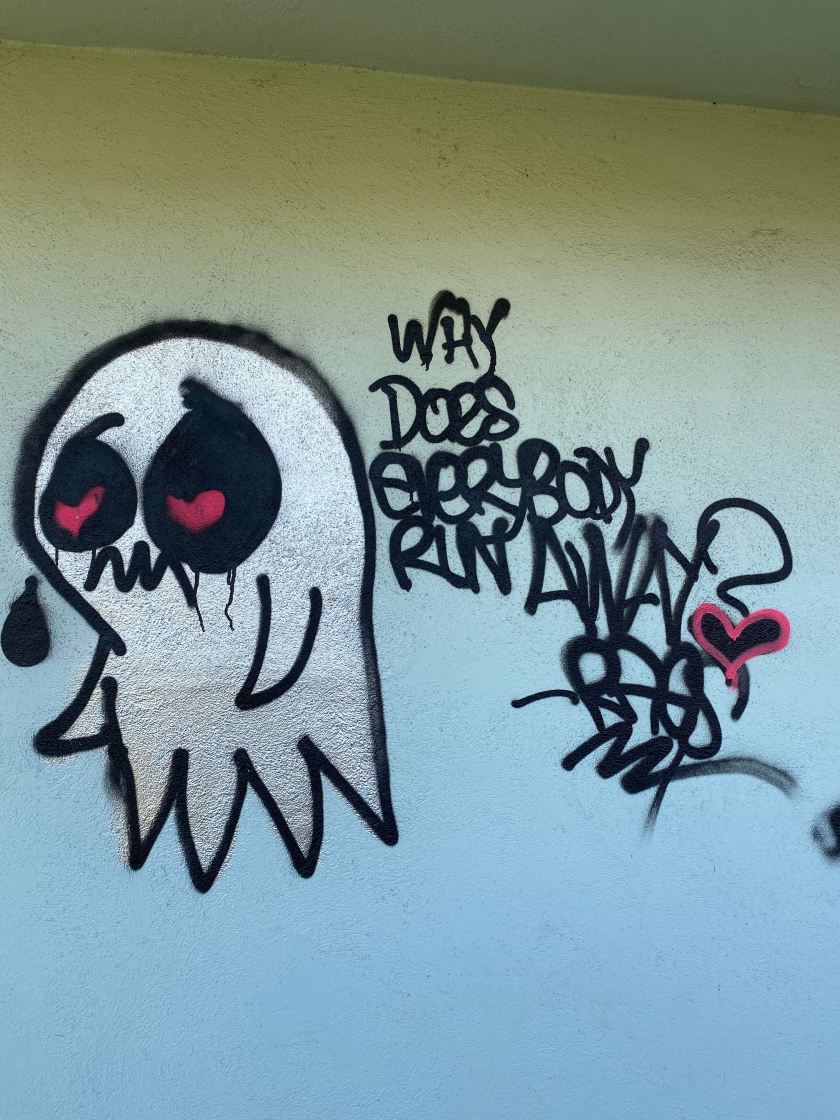
Your Role In The mental Health System

This is to all my fellow psychology majors, graduates, and future students. What do you believe your role in the industry is?

To all my fellow mental health consumers, what do you believe your role is?

These are the two simple questions I have. I’ll share mine, and I ask for you to share yours in the comments below!

I am both a major and a mental health consumer, but both roles have shifted dramatically. I thought my role as a worker was to help people. I thought my role as a mental health consumer didn’t exist; I knew I struggled with anxiety, but I believed it was just another hurdle to get over, and I’d gotten over many hurdles before.

I learned my role in the industry as a worker wasn’t to help people, and that people are mostly capable of helping themselves. My role was one of support and guidance so that they may discover what they are capable of. My role has also shifted recently in this aspect. My schooling has shifted from the goal of counseling psychology to the goal of research and clinical education. I know I want to be one to bring science and empirical data to the forefront of the industry. All this glorious information is sitting there wasted because clinicians don’t take the time to read it, and because the system is built in such a way that paying for training and education is ridiculously expensive for clinicians. Research is becoming more biased and doctored and that’s obviously a problem too. I want peer support integrated. I want evidence-based treatment properly understood.

My role in the industry as a consumer has changed as well. It’s bounced back and forth between dependent and utterly independent. It’s bounced between needing professionals and shunning professionals. It’s bounced between feeling hopeless and feeling as if I’m finally healing. I also have learned that my role includes reaching out to others, accepting their help, while also letting others reach out to me.

I look forward to reading your thoughts below.

Or, catch up with me on:

Instagram: @written_in_the_photo

Twitter: @philopsychotic

If you liked this post, please share and follow The Philosophical Psychotic. I appreciated every reader and commentator. You give me more reason to encourage critical thinking about mental health.

Posted in advocacy, Late Night Thoughts, psychology

Learned Helplessness In The Mental Health System

This is a term you may be familiar with if you work in mental health. It’s often used to describe patients who have spent significant time juggling between facilities, programs, and hospitals and as a result struggle with meeting their own basic needs.

It’s no secret that decent mental health care in the United States comes with a high price tag. Community-based programs that are essential for helping shed feelings of isolation and learning social skills (both of which can be necessary for us mental health consumers) are often tagged for those with the thousands of dollars to pay for it. As someone who was working full-time and provided with decent health insurance, I was offered a spot at a program like this free of charge. Unfortunately, the company I work for is switching insurances, and I’m not positive I can work full-time right now anyway.

It’s taken a lot to find that one little place. Through consistent panic attacks, paranoia, nights of hallucinations, I finally got in contact with a hospital who patched me through to a social worker. The social worker took a week to get back to me, just to tell me she didn’t work for that department anymore. She patched me through to a social worker in a different state who found me a program in less than thirty minutes.

Since none of that panned out, since I can’t find any psychiatrists near me and can’t afford holistic care, since I’m not sick enough to be in a hospital but not well enough to be by myself, I’ve resorted to daily breakdowns. My hope for healing waned. My therapist said I was experiencing “learned helplessness.” Let me explain why I’m not and why, if you are ever told this, you should think about it just as deeply.

Learned Helplessness Comes From:

Constant struggle with no perceivable escape.

People with learned helplessness have often accepted that they are unable to care for themselves–they believe they cannot control their outcome. They have been classically conditioned to believe they are inept.

The example my therapist gave me to explain the concept of learned helplessness was that of the experiment by psychologist Martin Seligman. You may know him as a positive psychology backer, and an avid studier of learned helplessness. Seligman and colleagues administered shocks to dogs strapped in a harness in a cage. In this case, the cage represented a trap and the shocks an unavoidable outcome. When the cages were opened, the dogs refused to leave the cage even when escape was made possible. The hypothesis here is that the dogs learned to expect pain and to expect no escape.

If learned helplessness is a result of being trapped, beat down, and losing sight of escape, then the mental health system has been systematically abusing people under the guise of treatment for ages.

When are we going to stop blaming the people who experience mental illness, who are constantly being beat down, held back, vilified, rejected, for feeling hopeless? Why do professionals immediately see fault in the person (just keep trying!) instead of fault in the system of support?

Note: This isn’t to say we should rely on others to pick us up–we’ve got to also work on believing in ourselves and coping properly with our experiences. It’s just a lot easier and healthier to do that with the proper guidance and support. No one can do everything by themselves all the time.

A Possible Reason

In social psychology, there is the concept of external and internal perspectives. There is a term for this I’m blanking on. Those with external perspectives often attribute outcomes to the environment around them, things out of their control, and often come from lower socioeconomic backgrounds. Those with internal perspectives often attribute outcomes to their attributions, things like their personal drive and work ethic and come from higher socio-economic backgrounds. As you can imagine, there are advantages and disadvantages to both perspectives.

I know people on both ends. I know people who consider themselves successful and attribute that to their constant strive for “something greater”, to their hard work, to their positive thinking, without acknowledging the two-parent home they come from with successful, hardworking role models, without acknowledging the support they had in following their dreams or attending college, without acknowledging the financial opportunities they were provided. I know people who don’t consider themselves successful and attribute that to their traumas, a broken economic/social system, and lack of opportunity without acknowledging their effort has waned.

One advantage to having an internal perspective is that when hardship arises, you are more likely to take proper measures to cope. You are more likely to seek support and utilize the support. The disadvantage is you see others as not trying “hard enough.” You also are less likely to support others in coming up because if you did it “by yourself”, they should be able to as well. You are less likely to take part in the community and less likely to advocate for community-based reform. You may be one of those people who see homeless individuals as useless bums.

One advantage of having an external perspective is that you see the structure of the world around you. You acknowledge (and experience) the pain of a system designed for failure. The disadvantage is depression. The disadvantage is that you give in to what you believe is your fate and struggle in seeing the change that could be made. You are more likely to relate to others who have struggled, and you’re more likely to be involved in helping others because you know what it’s like to feel like you have no one and nothing.

Which perspective do you think most (definitely not all) psychological professionals come from?

Cognitive Dissonance

Psychological professionals are trained to see the system as something there to support and guide their clients. They also go into the profession with the aim of supporting and guiding their clients. If it feels like that goal isn’t being accomplished, it may challenge their self-concept something fierce. This leads to cognitive dissonance: the imbalance between what someone consciously believes about themselves (including their attitudes toward different things) versus how they behave.

This is where I believe professionals need to be a little softer on themselves. Acknowledge that money, attitude, trauma, self-discipline, and outside support are just a few of the things that determine someone’s success in their mental wellness. Sometimes people can’t find help, and when they can’t find help, when they are sad about that, when they are feeling hopeless and defeated and angry, those feelings are valid. The system is often not our friend and we have a right to be angry about that–because no matter how hard we try, we can’t fix that by ourselves.

No matter how much I exercise, no matter how healthy I eat, no matter if I take meds or don’t, no matter how much I meditate, no matter how much I breathe during my panic attacks, no matter how many times I tell myself the pentagram on my ceiling isn’t real, no matter what I do to cope, I will not have thirty thousand dollars a month for personalized, integrated, holistic, community based, science based treatment.

What would give me thirty thousand dollars to blow? A really, really good job. What would give me that kind of job? Mental stability. What would help me achieve mental stability? A lot of support. How do I get a lot of support? Thirty thousand dollars.

Now, there are alternatives, and the system has set this up so that in order to receive these services, you must never aim higher than them.

County services, for example, are often provided to those below a certain income limit–this includes those on disability. If someone is stable enough to get a part-time job, and that job pays ten dollars over the state insurance income limit or disability income limit, that person risks losing the services which have been most helpful to them. No one wants to risk that.

And so you have an escape route, you see, much like the dogs. You can be well, work as many hours as you can and lose your integrated services. But much like the dogs, that escape doesn’t feel safe, not after having been shocked for so long. Inside the cage, at least you know what to expect. In a twisted reality such as this, the cage actually feels safer.

There are too many factors that go into being mentally well for this one-size-fits-all system to be as effective as it purports.

Agree or disagree? Leave it in the comments below, or join the discussion here:

Instagram: @written_in_the_photo

Twitter: @philopsychotic

If you liked this post, please share and follow The Philosophical Psychotic. I appreciate every reader and commentator. You give me more reason to encourage critical thinking about mental health.

Posted in advocacy, Community, Emotions, Freedom, Late Night Thoughts, Peer Support, psychology

Civil Rights Movement 2020

NO JUSTICE, NO PEACE.

This is the slogan circulating social media as I speak.

Los Angeles, San Jose, Oakland, NYC,Atlanta, Minneapolis, Memphis, Louisville. The list continues.

I posted yesterday about the importance of African American mental health support in a time when we are watching ourselves get killed across social media, in a time that is eerily similar to the civil rights movement of 2020–except that now we have video.

Now we have PROOF.

We can watch the brutality, watch the racism, watch the hatred.

We can see the anger, the violence, the threats that result from hundreds of years of oppressive social states.

I think popular opinion is that protesting is okay but looting is overkill. I refuse to take a stance on this because the level of internal anguish that comes from generational trauma cannot be overlooked because a Target burned down.

I do not wish harm on anyone, be it protester, officer, or store clerk. We must keep our focus. We MUST remember the message and focus less on the damage we can cause. Every human can cause destruction. It takes someone truly enlightened to channel that hurt and anger into a passionate, effective message.

I have been crying for hours.

A 19 year old man was killed by officers in a San Jose protest. I live 45 minutes from San Jose. Our protests will be happening this weekend.

I have been crying for hours.

I wonder what George Floyd sees, if he can watch us from the other realm. I don’t know much about him other than community members describing him as a kind, generous man. Was his death what we needed? Is this what transitions our country into a time of healing? We thought change would come with Trump and it indeed has: it’s brought disorganization, divide, and racism to the forefront of our consciousness. This is the 2020 vision we all thought it would be.

I have been crying for hours.

There are videos of eight year old african-american children crying for equality in a room full of people, speaking to adults in charge.

I have been crying for hours.

I don’t think the feelings can be properly explained. I have been feeling invaded and attacked, my paranoia surfacing strong. I am feeling that Twitter, TikTok, and Instagram have been hacking my cell phone because of the message I am spreading. I am trending in social media on Instagram for videos I have found online of necessary violence against protesters who AREN’T looting.

There is an undeniable connection between all of us African-american’s right now. It seems we are always united in pain.

That’s painful.

When this ends, will we go back to killing each other in the name of “honor” or “reputation” in the streets? When this ends, will our style, culture, and way of being in the world be imitated and copied still by musicians, influences, and celebrities who have been SILENT in the face of this revolution? When this ends, will we encourage our kids to be more involved in politics? When this ends, will we still have to identify ourselves as black Americans? Or will we be called simply “Americans?”

When this ends, will we still be united?

What can we do to lift each other up after this? We can’t just destroy buildings and black-owned businesses.

We are always united in pain. How can we maintain our unification in revelation?

I am 24 years old, my birthday in 2 weeks. My father is 61 years old, and was just a kid during the 1960’s civil rights movement. He has been arrested illegally for a robbery he didn’t commit and spent a year in jail until they found out they were wrong. He’s spent his life fighting racist citizens and cops and community to the point that he sleeps with a hunting knife near and is always worried about getting into a fight or someone bursting in our door.

It’s my turn now to experience a racial revolution, to participate, and to find my identity. I am a light-skinned African-American who has been profiled by police, given unjustified tickets, had back-up and four cops called on her while she was simply sitting in the car, hands very visible on the steering wheel. I did not breathe. I grew up in a school with maybe 4 black students, and went on to a college that catered only to Hispanic students (for the record this wasn’t a problem, many Hispanic students need the help, but so do the black students who are systematically underprivileged compared to even Hispanic students).

My chest is tight. I can’t imagine living in the 50s, the 20s, the 1800s.

I’m mixed race; I would have been a product of rape and an eventual sexual object used for humiliation and, in my adulthood, a symbol of rape.

I can’t imagine living in the United States in any other time than this one.

I’d be dead.

Instagram: @written_in_the_photo

Twitter: @philopsychotic

TikTok: @alisaysno

Posted in advocacy, Emotions, Freedom, Late Night Thoughts, Peer Support, psychology, Supporting Friends/Family, Uncategorized

Mental Health And African-American LIves

There was not a Mental Health Month post on Thursday for Somatic Disorders as I anticipated, not because I ran out of time but because my mind has been engrossed in other disturbing realities and going-ons in America. I will do a post on Somatic Disorders soon. But firstly, we need to discuss something.

For all the mental health websites and advocate pages on Instagram who are American-run and have not mentioned ONE DAMN THING about the riots in Louisville, Kentucky and Minneapolis, Minnesota right now, you should be ashamed of yourselves. ASHAMED.

How dare you claim to be an advocate of mental health and not bring to light the racial issues that are not only causing MORE trauma for today’s generation of colored folks, but is fueled also by the generational trauma of our ancestors.

I am a mixed race individual; my father is African American and my mother is Caucasian. I am light skinned, often mistaken for Mexican, and my mental health and physical health has been impacted by this. Doctors are less attentive. They don’t listen properly. They accuse me of drug use in the middle of my panic attacks.

For African American people in America, there is a lot of grief. There is a lot of trauma, a lot of loss, a lot of pain. We feel unsafe, unheard, tossed aside. That births anger, rage, and perpetuates violence. With the recent murders of George Floyd and Ahmaud Abery and Breonna Taylor (George and Breonna murdered by police; George was already on the ground with three cops on top of him and Breonna was IN HER HOUSE), all of these feelings and this connection we have to each other is growing stronger. Violence is happening because of the angst of hundreds of years of BULLSHIT.

So the fact that so many pages are claiming to talk about Mental Health and are avoiding this issue for political reasons I suspect makes me sick to my stomach. Until this is addressed in all facets, nothing will change. As social media has been circulating: No Justice, No Peace.

Not only does blatantly ignoring this subject aide in the problem rather than the solution, it also sends the message that those of us in the american mental health system who are dark don’t matter as much. We don’t need to talk about this collective pain we feel right now because your page can’t afford arguments in the comments.

I say affectionately, FUCK YOU.

Get off your fucking high horse.

Remember when I said I have made very frank posts on my previous blog? This is one of them.

Get off your fucking high horse and recognize that the deaths of these people, the murders of these people, affect African-American people across this nation. My anxiety, my grief, my voices, my paranoia have all doubled because of what I see happening to the people who are part of my ancestral family. I feel the same for the Native Americans who are hit the hardest with COVID-19 and receiving absolutely no help, except a box of body bags rather than PPE. Part of my family is Native to North America and their suffering has only added to my grief.

This IS a mental health topic. Racism IS a mental health topic. Not because racism is a disorder, but because how it effects people dictates their mental states. To advocate at this time for mental health without reminding followers and subscribers that people of color are collectively struggling mentally with this, to the point that VICE has to be the one magazine to offer self-care tips for African Americans, IS SELFISH.

It’s SELFISH to ignore this as a mental health topic.

I’ve been sick to my stomach all day, lost in my thoughts and my pain and watching Minnesota burn down their police station.

If we truly are all in this together, then where is your support for the black community right now? Where is your acknowledgement of our mental health in a time when we are watching ourselves get killed? Somewhere up your ass?

Good Night.

Posted in Late Night Thoughts

Mental Health Month: Update #2

If this was a full-time position, I’d be fired by now.

I am struggling cognitively in a way that I haven’t in a few years. Writing is difficult. The post on Substance Use will be tomorrow evening after I get off work, granted my mind does not melt from my ears between right now (10pm) and 7pm tomorrow.

You all have been so patient with me, so kind, and have been thoughtful readers.

A big welcome to the many of you who have followed recently in these last three weeks. We will be on a grand writing adventure together.

Until tomorrow, friends

If you want to share your personal mental health experience (anonymously or otherwise) on my website, contact me on here or via my social media below:

Instagram: @written_in_the_photo

Twitter: @philopsychotic

Posted in Late Night Thoughts

Happiness

I’ve been thinking a lot about what it means to be happy. Here are some of my thoughts.

I’ve done what all good, sheep-like psychologist eventually do: create categories for something that is probably far too complex for such an explanation.

But, hear me out.

I’ve reasoned there’s organic happiness and there’s constructed, or synthesized, happiness. An organic happiness would be someone’s baseline: how you are when you wake up in the morning, how you respond to the corresponding events of the day. This is the happiness we often feel we need to correct.

A synthesized happiness, then, comes in peaks and waves from an outside source. It eventually decreases gradually or exponentially. It may be uncertain, untrustworthy, or fleeting.

These thoughts came into my head not only because of our humanly need to correct all feelings we feel don’t line well with other’s feelings, but because there is such a stark difference between the happiness I feel organically, the one that sprouts naturally in my consciousness, a simple product of biological existence, versus the happiness I feel after I’ve accomplished something I had doubts about, after spending a day with the people I love, or after I take a pain pill for my back.

I think I’ve made this distinction because I notice I’m often disappointed in my organic happiness, in my baseline of existence.

There are tons of speculated biological and evolutionary reasons why certain chemicals peak at certain times in our brains–to keep us focused, to associate good feelings with good friends so that we build connections which were at one point most essential for survival, to simply bring us enjoyment. But now, there are so many things in life that can trigger intense rushes of endorphins, like substances and fame, that what we experience in the day to day just can’t compete. I am happier and friendlier when traveling. I am happier and friendlier when on pain medication. I am happier and friendlier to strangers when I am also among people I care for and love.

And so I find now, when I have a moment to rest and reflect, I remind myself that everything is enough.

I’ve had three of my six past therapists tell me I need to tell myself that I am enough, and I’ve tried that, but I think this stretches deeper. I think that realizing that life is enough, that how I feel is enough–negative or positive–is what paves the way for accepting myself. If I can truly believe that every negative feeling exists as a moment ripe with the potential for growth, and that every positive feeling exists as a moment ripe with the potential for contentment (as opposed to: oh no, I’m happy, let’s see how long this lasts), then I think that may be the key to actually existing.

But believing something doesn’t mean I create a mantra and repeat it to myself until I drop dead. That doesn’t foster belief and studies show that reiterating positive mantras to yourself can actually make you feel worse. I measure how much I believe in something by the rate and construction of my reactions. Let me give an example.

Last night while watching television, I felt the same disappointment I discussed earlier: I felt sad that I couldn’t spend every day feeling the fuzzy, determined, focused happiness that pain medication brings. I felt sad that I felt sad about that. I felt sad that my own level of being just didn’t seem to be enough; I enjoy my personality, I admire my intelligence, I accept my flaws, but the feeling of existing, the feeling of being human, limited, temporary, often enrages me. Being just isn’t enough.

And in this moment of realization, my mind reacted with a simple thought: let’s be okay with this.

Now sometimes I have voices responding to my thoughts, or voice-like thoughts responding to my thoughts, but this was all me, it was a reaction that I haven’t programmed. I haven’t spent the last two years off medication waking up every morning spewing “learn to love yourself” and “you are enough” quotes until I repeat them robotic, on demand. I’ve spent my time entrenching myself in the madness, the chaos, the pain. I spent time locked in my room staring at the wall, if that was what my pain was. I spent time walking off waves of panic, if that was what my pain was. I spent time being unhappy, if that was what my pain was. I resisted the urges for bail outs–a psychiatrist would have bailed me out, numbed me to my anxiety, tainted the voices and the paranoia, evened the mood swings and depression. And I would have learned nothing.

This is not to be said in a way where everyone taking medication should be offended. For me, medication was another avoidance technique that I’d perfected through years of trauma. For others, medication is the stability key that allows them the time and focus to come to the same types of realizations I have. We all reach wellness in different ways.

I’ve noticed in depression, I am no longer overwhelmed with sadness because I allow the sadness to spread. I choke sometimes with the paranoia, fight it, try and reason with myself and that often cycles me further. I am still growing. I choke with the anxiety as well, get lost in the sensations of my body, and the doom my mind screams. I am still growing. But the depression, which has been with me since I was eleven years old, has become a close friend. I am 24 years old. It’s taken 13 years to cultivate this friendship.

And so happiness for me does not mean contentment or joy or the absence of sadness. Happiness for me means experiencing being without judgement.

I figured I’d share some of these thoughts with everyone as we plunge through Mental Health Month as well as the Covid Pandemic.

This week we are covering Schizophrenia, Bipolar, and Dissociative disorders, starting tomorrow. The post will be later in the evening (PST) as I have some self-care and some things that need to get done at work. If you have a blog post on those topics that you’ve written and would like to share, or if you’d like to submit your own story, contact me here or on my social media handles below.

Instagram: @written_in_the_photo

Twitter: @philopsychotic

If you enjoyed this post, please share, like, and follow ThePhilosophicalPsychotic. I appreciate every reader and commentator. You give me more reason to continue reporting poorly executed science.

Posted in advocacy, Late Night Thoughts

Psychoanalysis, The Locked Ward, and Entropy

Some more thoughts to share, friends. Let’s talk psychoanalysis, the locked ward, and entropy.

No, we will not spend countless paragraphs discrediting psychodynamics and psychoanalysis. The facts are there: Freud’s systematic hypotheses were circular, full of confirmation bias, and untestable. This makes his ideas of Psychoanalysis quite useless, inherently flawed, and simply unscientific. However, modern psychodynamics has come a long way, and if you’ve ever read The Center Cannot Hold, by Elyn Saks (if you haven’t, READ IT!) you know that one of therapists which helped her through her cognitive dysfunction pre-hospitalization was indeed a psychoanalyst. Her therapist often took Elyn’s discombobulated words and reflected them, unbiased, nonjudgmental, back to Elyn. This doesn’t happen often anymore, especially not in hospitals, and we lose this understanding that psychosis is not necessarily meaningless. This idea that it may have meaning is derived from psychoanalysis itself, which is rooted in Psychic Determinism: every thought, action, personality quirk, is there for a reason; nothing is ever accidental.

Anyone who says it’s impossible to communicate with someone in psychosis hasn’t really tried. There was a time I did a regular outreach group at the local psychiatric hospital, in which i’d been as a patient before, and there were often people in my group who were by clinical definition incomprehensible. Sometimes people would wander from the group or I’d end early and someone would want to keep talking. To the average person, and I’m sure many of the workers there, the babble was pointless, but there was one particular man who sought me out every time he saw me. And when he said something like “There isn’t anyway to know the ticking and I don’t know where my home is but I know there’s some fact in that”, I’d say something like “it’s hard when we feel lost and can’t find home” or “there’s a lot we can know in the world, and not know”.

This wasn’t easy. I stumbled a lot over my words, trying to keep up with his thoughts, and maybe nothing I said ever resonated as clearly as these words are registering to you as a reader. I wouldn’t know, I’ve never had someone approach me in this way during my worst moments. But it did something. Sometimes the group was just us, and we’d talk like that, back and forth, for fifty minutes. He’d always shake my hand before I left, and this was one of the people the staff “warned” me about, said he could get unruly, loud, disruptive, and although I can never confirm the way I spoke with him as a clear reason why he never appeared aggressive with me, I can say that our conversations were always even tempered, relaxed, human.

I do not advocate for this as the ONLY form of treatment. Acute episodes are terrifying, traumatic, confusing, they require many things. But staff shouting, tackling people, and being argumentative doesn’t reduce the terror, the trauma, or the confusion. I CAN say that.

So, there are positive things to come out of the idea and possibly the practice of modern psychoanalysis and psychodynamics. Let’s be clear though: Freud was wildly inept as a scientist. All of his hypotheses were derived from case studies and never tested with experiments or even standardized self-report data.

Scrolling along some text in my personality book, some reading for classes during COVID, this author caught my attention when he compared the natural course of entropy in the universe to the entropy of our thoughts. Essentially, entropy focuses on how ordered systems, over long periods of time and inevitably, tend toward disorder. Freud had a similar sense about the mind, says this author, and insisted that we attempt to order our thoughts and lives for the sake of our own creativity and growth. Entropy dooms these efforts.

Freud describes his philosophical understanding of his own hypotheses in terms of libido (NOT just sex drive, but a life energy) and thanatos, (not Thanos as I had read, but a drive toward “death”). Libido described one part of the brain designating energy for a process, and in that time such energy could not be used anywhere else in the brain. We know this not to the be the entire story now. Thanatos was not a wish for death, or a fear of it, but was this very recognizable, a very EASTERN idea that everything contains its opposite.

This is essentially a less developed, disorganized form of YinYang. It’s presented in the textbook as quite a novel idea. But Eastern cultures and indigenous cultures across the globe, have held this collective understanding for centuries. Reading philosophy on the duality of life is what helped me come to terms with my psychosis. Freud didn’t do it first, I promise. If anything, he was super late to the party.

He called his version of YinYang the “doctrine of opposites”. While I refrained from rolling my eyes at this, his “doctrine” maintains that everything requires and implies its opposite. That is, life needs death, sadness needs happiness, and one cannot exist without the other. If you’re curious how this really lines up with YinYang, I’d recommend getting in touch with someone who knows this philosophy well, or reading the basics in this post here.

Why is any of this relevant?

I think what I learned, and am still learning, is that pain is not as simple as we want it to be. There cannot be pain without no pain, and there cannot be no pain without pain. You can’t fix your thoughts with medication, therapy, electric shocks, substance abuse. You can’t be broken without also being together. Unifying the good and the bad, not separating them, not fighting with one over the other, has been the key to many of our successes.

You cannot be ill without also being well. That is the message here. If you identify with mental illness, then you identify, also, with mental wellness; there is harmony in the illness, and disharmony in the wellness. We see this often: there are advantages to being anxious sometimes. For me, I know my anxiety makes me more prepared during stressful events. Because i’m panicking all the time, I don’t panic when others do. I’m often a voice of reason. There are disadvantages to being happy: for me, I get wary of this gentle contentment I’ve come to over the years, because of the imminent threat of not being happy again.

A lot of people view that latter statement as a struggle particularly of clinical depression or bipolar. I don’t see it that way anymore. I recognize that is the duality of things: there is inherent unhappiness in happiness. That’s the nature of things.

Labeling the thoughts as defective is the result of the depression, and part of the struggle. Accepting the truth in pain and the dissatisfaction in wellness is recovery.

What do you think?

Curious about research, news, and a community dedicated to “Eliminating Barriers to the Treatment of Mental Illness”? Check out TreatmentAdvocacyCenter.org for more information, as well as support for COVID-19. This post isn’t sponsored by them, I just stumbled across their site and found it highly useful.

For updates on posts, research, and conversations, follow me:

Instagram: @written_in_the_photo

Twitter: @philopsychotic

If you enjoyed this post, please share, like, and follow ThePhilosophicalPsychotic. I appreciate every reader and commentator. You give me more reason to continue this joyous hobby.

Posted in Late Night Thoughts, psychology, Therapy, travel

What Does Stability Look Like For You?

For some of us this simply means having three meals a day, our medication, an income (social security included) and a permanent roof over our head. For others that means a more than comfortable income, a full-time job, a family, and spare time to travel. Some of us haven’t asked ourselves about stability because it feels elusive.

Feeling Lost

This happens. Stability isn’t born out of stability, it’s born out of troubles and pain and the murky mist of a labyrinth; we are lost before we are found. Understanding that this pain exists because it must, because even pain needs space to breathe, is the first step to accepting the present.

It’s true some people are perpetually lost. There are those of us without shelter, without family, wandering the streets at the mercy of our madness. With poor resources and a poor outlook on mental health recovery, not enough people receive the services they deserve. Chances are, because you’re reading this now, you aren’t that person.

This does not mean compare your life. This does not mean you should feel guilty for having food, shelter, and family while still being in tremendous agony–it’s illogical to compare pains. We all struggle, we all suffer, and that’s that. What it means is that you are not perpetually lost. It means you have a greater chance at recovery. That’s a fact.

Because you have a greater chance at recovery, you also have a chance to help those without your advantage. You can give back. You can have purpose and be fulfilled while fulfilling.

In this we see that being lost is not a time to mourn. It is not a sign of predestined suffering or eternal pain. Being lost is an experience to be grateful for. It’s an experience that teaches us to teach others.

A Change of Perspective

Such a change of perspective isn’t a simple jump from “negative” to “positive”, but a deeper understanding of the beauty of pain and the expectations of happiness.

We often have a vain idea of what happiness means. This can turn into us holding ourselves to unrealistic standards, and when that standard isn’t met, we crumble, our self-worth tied up in our expectations.

We can also have a clear but misguided understanding of pain: we disregard it, try to ignore it, hate it, cry over it, damn it to hell. Therefore we glaze over areas of pain that help us grow, that show us what we really want for ourselves. When we break out of the darkness and into the light, we get wary of the brightness in anticipation of pain, completely discounting the contribution pain had made–if it were not for that darkness, we may not have had the opportunity to experience the light.

Rather than try and predict our pain, rather than set unrealistic expectations of happiness, a balanced absorbance of both experiences, no matter how rough or how euphoric, can present a new way of living, one in which we experience the rawness of ourselves.

Where will you go?

And so my question for you all is where will life take you? Where will pain take you? Where will happiness take you? What journeys can you start and end?

Dramatic change can yield dramatic results.

Stability for me is a comfortable income, a travel plan, proper meals, exercise, and a compassion toward my inner demons, without which I would be heavily medicated, deeply depressed, and unrealistically expecting a miracle.

For updates on posts, research, and conversations, follow me:

Instagram: @written_in_the_photo

Twitter: @philopsychotic

If you enjoyed this post, please share, like, and follow ThePhilosophicalPsychotic. I appreciate every reader and commentator. You give me more reason to continue this joyous hobby.

Posted in Emotions, Late Night Thoughts, Therapy

February’s Scheduled Mental Breakdown

I like that I’ve already failed in keeping up with my scheduled posts. If I’m actually consistent with a goal I set, someone call 911 because my identity has been stolen.

This will be a short post and not research based. I’ll try and do these once a month. Again, if I *actually* do this once a month, call 911, stolen identity, yada yada.

I preach a lot about the benefits of self-care and ways to manage different experiences/symptoms. A lot of the time the information is helpful and the tips are ones I use myself. And so I wonder, because this happens to me at times: when none of your coping strategies work, what do you do?

I’ll write a more formal post on this idea later, with actual, helpful ideas, but at the moment I have no conception of supportive thought.

I suppose being aware of what your body and mind are feeling and why is important here. My possible reasons for this scheduled mental breakdown include:

  1. Family stress.
  2. Missing deadlines for an online class because of exhaustion from family stress.
  3. Impending death
  4. Health anxiety
  5. Re-activated PTSD symptoms, related to health.
  6. Loud thoughts/quiet voices
  7. Not believing my life is real
  8. Being trapped between school and work and unable to take a break from either.
  9. Believing my therapist, doctors, and friends believe I am a liar about my mental health. *Side note: anyone else ever felt this? That people think you’re just some fake person creating lies for attention? Anyone start thinking about it so much that you think maybe you are a fake and the last 6 years haven’t actually happened, you’re just confused? But then wouldn’t that actually make you crazy? Anyone? This is really fucking with me today.
  10. Physical health frustrations, including forcing my doctor to give me an EKG because I’m terrified of dying suddenly from Cardiac Arrest because of palpitations I’m not even sure are real (I have a history of feeling things in my body that aren’t happening–biofeedback proved it.)
  11. Feeling blank thoughts.
  12. Wanting to withdraw from people but knowing I shouldn’t and also that I can’t, given I must finish these courses and also go to work like a good citizen.
  13. I’ll never get serious mental health assistance because I live at home, in America, can handle working three days a week (barely), am enrolled in college, and have never been outwardly violent, disruptive, combative, or otherwise non-compliant (other than stopping medication). Instead, I spent months in my room, showering only if I went to work (had been on-call); I dropped my classes, spent all of my time playing Minecraft, did rituals to call the god Thoth for help/wisdom, listened to voices and loud thoughts, slept, had nightmares, didn’t sleep, and held maybe one or two short conversations with my parents who figured I was just “going through a phase”–but because none of this caused me to talk to myself or be disconnected in the way you’re expected to be, I don’t get taken seriously.
  14. Anxiety. Just. Anxiety.
  15. Drinking on the weekends.
  16. Not exercising like I was.
  17. Falling short on responsibilities.
  18. Forget *actually* being sandwiched between school and work. Just the feeling of being trapped.
  19. Falling short on personal expectations.
  20. The potential of wasting my potential.
  21. Financial issues

I think that’s a pretty solid list. The healthy thing would be to work through each issue one by one and identify things which can be easily changed and things which may just need to be felt and moved through. Accept that it could take weeks and that this is a rough patch.

But today I just feel like laying on the couch and being unhealthy. So maybe that’s what I will do. My cat seems to feel it; she’s never this cuddly.

Until next time.

For updates on posts, research, and conversations, follow me:

Instagram: @written_in_the_photo

Twitter: @philopsychotic

If you enjoyed this post, please share, like, and follow ThePhilosophicalPsychotic. I appreciate every reader and commentator. You give me more reason to continue this joyous hobby.

Posted in Late Night Thoughts, psychology

Are People With Mental Health Issues More Creative?

I feel this is a question constantly fueled by confirmation bias. That is, we believe that this is true, or want to believe so, and so if we are an artist or musician or whatever, we say that yes, a lot of our most creative works comes from our struggle.

My personal experience has been that there are moments where my creativity is boundless and other moments it is stagnant. It depends on my mood or my thoughts, and I think that’s how it goes for a lot of people.

I think why people get this impression is that those of us who have struggled with our mental health, in any form, are often forced to look at life and existence differently. We’re going to have some trippy insight or thought provoking ideas because we think a lot, too much most of the time, and we’ve investigated many different avenues for many different perceptions.

In the past, my depressive episodes consisted of no showers, too much food, sleep at peak sunlight hours and awake at peak sleep hours. I also wrote a lot of poetry.

I hate poetry.

Okay, that’s a strong word. I don’t hate poetry. But it’s never appealed to me as an art form. I could stomach reading really beautiful poetry, but if it wasn’t unique and full of meaning I didn’t like it. And so to belt out poems about sadness and the crushing weight of reality was very unlike me.

I wouldn’t say the depression enhanced my creativity. I would say it pushed me into another realm of expression. And really, poetry saved my life many times.

My psychosis introduced another art form I’d never considered: wood carving and burning. I designed, carved, burned, and painted the pieces for a good two months after getting out of the hospital. Something about following the lines and having that strict order, something to focus so heavily on, let my thoughts wander freely while keeping my body anchored and centered. When that form of expression was no longer needed, I just kind of abandoned it. I haven’t touched the equipment in over a year.

I did a lot of nonsense writing as well. I made dark drawings of creatures created in my mind and discovered when I focused, I could whip out some detailed designs. I don’t draw, either

And so what I think happens is our mind is so starved of understanding when we’re in these states because we fight it so hard. We fight the depression to stay happy, we fight the psychosis to say coherent, we fight the anxiety to stop shaking, we fight the mania so we don’t break the bank. But, in a way, these states are a type of expression. And when we stifle that expression, it finds another avenue. For many of us, we translate that struggle into music or art or writing or projects and hobbies. It makes us look like creative geniuses.

What could depression possibly be expressing? What could psychosis? It was only a few decades ago that psychiatric professionals believed delusions completely incoherent and meaningless. It’s only been recently that studies and observations have hypothesized that many delusions and ramblings are indeed coming from real pain and fear anchored in the patient’s past or present, or from something witnessed in the world.

For example, my “delusions” often revolve around possession. In the worst of it, I feel everyone is an imposter, that everyone is lying, and that if I let my guard slip I will be harmed. My soul will be stolen and trapped in the deepest depths of the most hellish hell.

None of that, so doctors say, is reality.

But, I grew up in a very unstable household with one parent heavy into mind altering substances–hard drugs and alcohol–and so one moment could be full of laughter and joy, the next full of tears and violence. And because I was quiet and sheltered, I never really interacted with other children to learn I could trust them. So instead, I learned to trust no one.

My lack of trust is the foundation of every delusion I’ve entertained. Now, when my thoughts turn in this direction, when everything is a message, when every death is a sign, when dead celebrities are lifting me up and pushing my career forward to trap me, I don’t try and reason myself out of it because I’ll only reason myself into it. Instead, I focus on trust. What, besides someone being possessed and meaning harm to me, is another reason I’m having trouble trusting and interacting with this person?

This steals a lot of power from the delusion sometimes, and also helps me notice that my brain is jumping to extreme conclusions as a way to express its distress. And that means I should pay attention.

Our brains are always finding weird ways to exist in this life. Humans are inherently creative, but we sometimes categorize said creativity and contain it. Instead, we should see it from all angles, even the dark ones.